
The B2B E-commerce Growth Strategy: A Roadmap for Digital Wholesale Transformation
Introduction: The Modern B2B Paradigm Shift
The traditional landscape of B2B sales—defined by manual order entries, physical catalogs, and endless phone calls—is undergoing a rapid digital evolution. Wholesale buyers in the modern enterprise market now demand a frictionless, “consumer-grade” digital experience. For manufacturers and distributors, digital transformation is no longer an option; it is a prerequisite for survival and scalability.
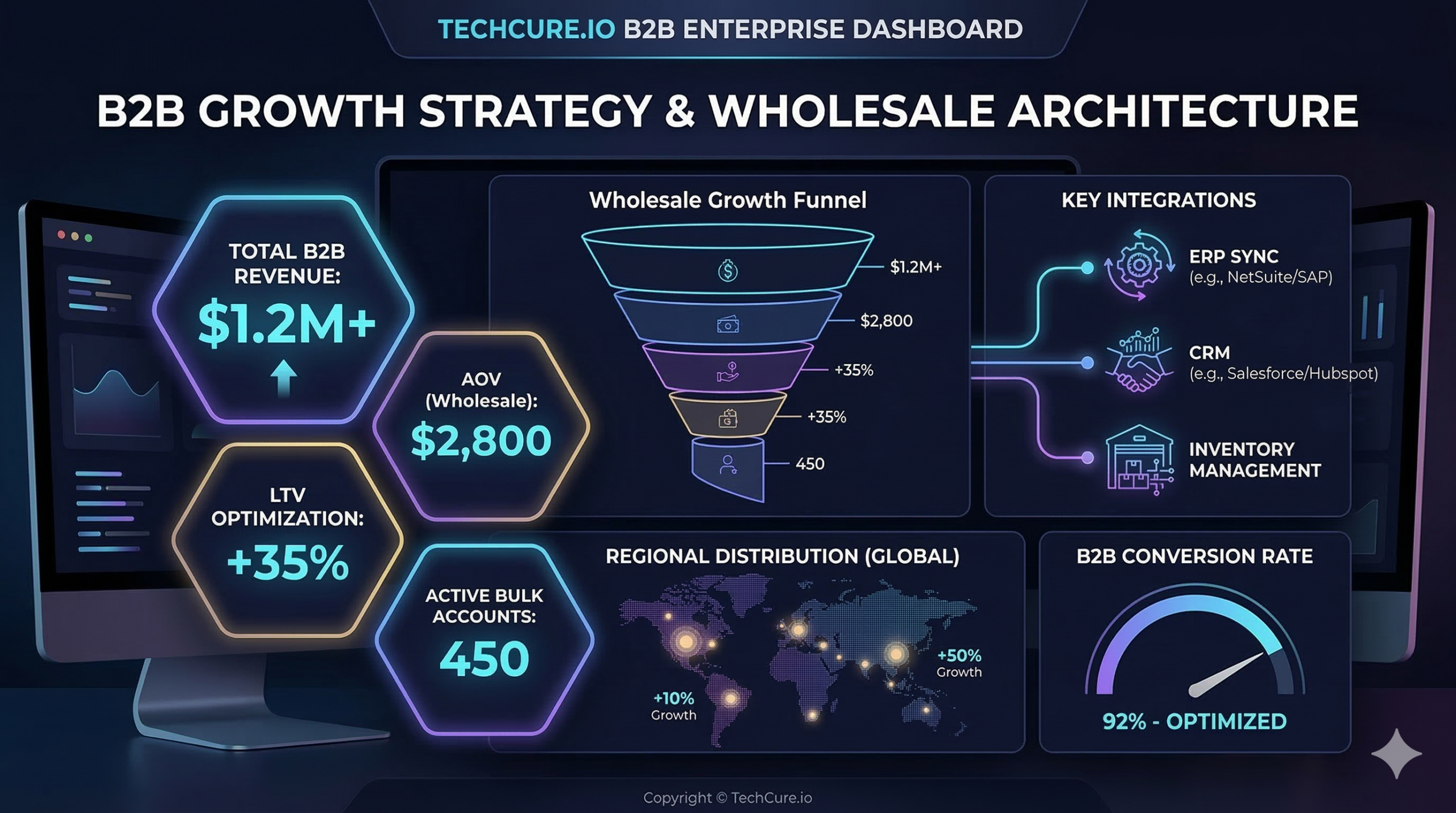
At TechCure, we view B2B e-commerce through the lens of Revenue Engineering. It is not just about building a storefront; it is about creating a scalable digital engine that automates complex workflows and maximizes Customer Lifetime Value (LTV).
I. Architecture for Enterprise B2B
A high-ticket B2B portal requires a vastly different technical architecture than a standard retail store. While a retail site focuses on “impulse buys,” a B2B site must focus on efficiency and data accuracy.
1. Custom Middleware and API Logic
Most off-the-shelf platforms are built for simple transactions. B2B businesses, however, often have unique logic. This is where Custom Middleware Development becomes the backbone of your strategy. By building a custom bridge between your storefront and your internal systems, we ensure that:
- Contract Pricing: Specific customers see their negotiated rates in real-time.
- Bulk Ordering Logic: Customers can add hundreds of SKUs to their cart via CSV upload or “Quick Order” forms.
2. Multi-Storefront (Headless) Capabilities
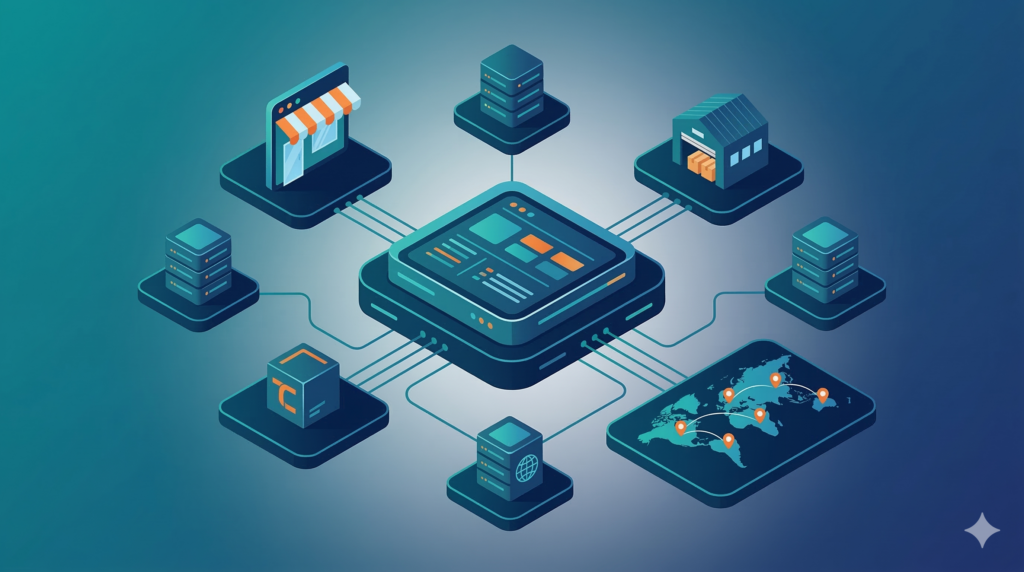
For brands operating across different regions or industries, a “Headless” approach allows you to run multiple specialized storefronts from a single backend inventory. This provides the agility to launch new brands or sub-sites without duplicating your operational workload.
II. Strategic Integration: The Unified Ecosystem
The greatest bottleneck for scaling B2B brands is “siloed data.” If your website doesn’t talk to your warehouse or your accounting software, you are losing money on manual labor.
1. ERP & Inventory Synchronization
We specialize in deep-level integration with industry-standard ERPs such as NetSuite, SAP, and Microsoft Dynamics. This ensures:
- Live Inventory Visibility: Buyers see exactly what is in stock across multiple warehouses.
- Automated Order Routing: Orders are instantly pushed to the correct fulfillment center, reducing the “Order-to-Cash” cycle time.
2. CRM and Personalization
By integrating your storefront with a CRM like Salesforce or HubSpot, you can track buyer behavior. This allows for Account-Based Marketing (ABM)—providing personalized product recommendations and bulk-buy incentives tailored to each individual wholesale account.
III. Conversion Rate Optimization (CRO) for Wholesale
In B2B, CRO isn’t just about changing button colors; it’s about reducing friction in the procurement process.
- Streamlined Re-ordering: 80% of B2B revenue comes from repeat buyers. We implement “One-Click Re-order” and “Order History Duplication” features that save your clients time.
- Credit and Net-Terms Management: Automating the application of Net-30 or Net-60 terms at checkout allows your buyers to place orders without needing a credit card on file, mirroring the real-world wholesale experience.
- Quote Request Workflows: For complex orders, we build “Add to Quote” features that allow sales reps to review and negotiate prices before a final invoice is generated.
IV. Technical SEO for the B2B Market
To attract high-ticket clients, your portal must be visible during the “Research Phase.”
- Advanced Schema Markup: We implement Product and Organization Schema so that your technical specifications show up directly in search results.
- Performance Engineering: Speed is a massive ranking factor. We optimize for Core Web Vitals to ensure that even with thousands of SKUs, your site loads in under two seconds.
- Knowledge Hubs: We help brands build “Technical Documentation” centers. By indexing your manuals and spec sheets, you capture high-intent traffic from engineers and procurement officers searching for specific part numbers or solutions.
V. Security and Compliance
For enterprise clients, security is a deal-breaker. Our B2B builds prioritize:
- WCAG 2.1 Accessibility (ADA Compliance): Ensuring your site is usable for everyone and protected from legal risks.
- Data Encryption: Protecting sensitive wholesale pricing and customer contracts.
Conclusion: Engineering Your Growth
B2B e-commerce is not a project; it is a long-term growth strategy. By investing in Custom Architecture, Deep Integrations, and User-Centric Design, you transform your digital presence from a simple catalog into a high-performance sales machine.
At TechCure, we have over 15 years of experience helping brands navigate this transformation. We don’t just build websites; we build the future of your business.
Is your B2B operation ready for the next level? Consult with our Senior Strategy Team to build your roadmap to digital excellence.